

Macro Musings
- simon.pugsley
- Dec 9, 2025
- 5 min read

In 2025 I wanted to dedicate some time to macro photography. In this blog I talk about the kit I used and my experience with a macro lens, whilst also comparing it with a point and shoot camera or lens with a macro function, and other uses for a macro lens.
Back end of 2024 I bought a TTartisan 40mm f2.8 macro lens with 1:1 magnification and for £95 new it’s been a great lens for me to get into macro photography. My camera is Fuji X mount APS-C so effectively it's a 60mm lens full frame equivalent. Having also watched a couple of YouTube macros photographers I also bought a cheap manual flash and a diffuser.
What is Macro Photography?

In its purest sense Macro is often described as a photo taken that achieves a 1:1 ratio (life size) of a subject to your sensor. If you’re photographing something that is one centimetre in length, it is projected exactly one centimetre onto your camera sensor, it is at life size.

Not all lenses that have macro in the name are 1:1. Some macro lenses, or cameras that have macro capability, have a 1:2 ratio, which is half-life size, so your one centimetre subject now appears 0.5cm on your sensor. Others have 2:1 ratio which doubles the size of your subject on your sensor.

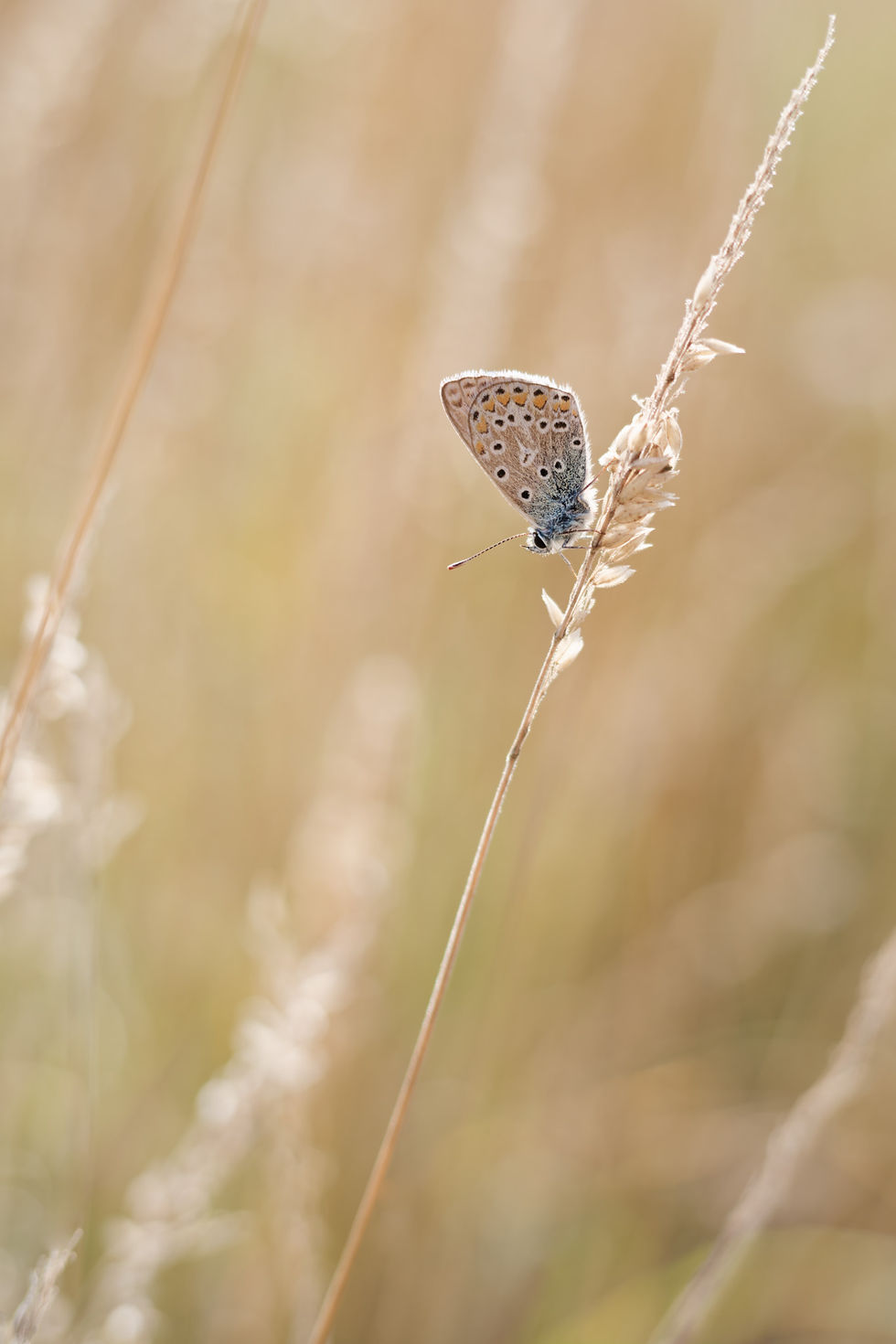
I found I don’t use the 1:1 magnification most of the time, based on what I’m shooting, but when I do it tends to be ladybirds or bugs/ things that are not moving. I also use macro mode on my compact camera which probably gets me 1:4 ratio and would probably be considered close-up rather than macro. However so long as I achieve the effect I want, the definition of macro or close-up doesn't matter.
Distance Definitions

At 40mm my working distance is about 3-4 cm’s, it’s very close and therefore the subjects I choose are bugs or spiders, not active subjects like bees. It also means I may be blocking light hitting the subject because I am close, so this is where the flash and diffuser comes in useful. Generally, the longer the focal length the greater your working distance, and this is great for not disturbing your subject. It’s important to know the difference between the often manufacturer quoted "minimum focus distance", is not the same as the practical "working distance".

Minimum focus distance is the distance from your sensor to the subject. This is what camera manufacturers quote in the specs. This distance may sound big (15cm) but if the lens is long (10cm), or extends, your working distance will be short (5cm).
Working distance is the distance from the end or your lens/lens hood to the subject. This is the practical use of space when it comes to macro work. For insects, the bigger the distance the better, so you don't spook them.
Practical Use
Most of the summer I’ve tried my hand at tiny insects. Being handheld, manual focus, with no image stabilisation, no focus stacking, and with a very short working distance, I needed high ISO’s to compensate for the fast shutter speed required to avoid camera shake and subject movement. Whilst the images were ok they didn’t retain the detail I wanted. This is where the flash and diffuser has been a revelation for me.

Basic settings have been 1/250 (maximum I can use with a flash) f16 and ISO 500, with the flash speed at anything between 1/8 and 1/32. The flash freezes any motion, and the diffuser stops the flash blowing everything out. At 1:1 even at f16 I still had a very shallow depth of field. As I’m handheld and using a manual lens I don't have in camera focus stacking, and I haven't yet tried doing it manually with software. Focus stacking would resolve this depth of field issue but I spend too long holding my breath whilst I take 1 photo let alone several! Which brings me on to another point, I used burst mode but at 5 or 6 frames per second, simply in hope that one of the shots is sharp. This would be the method, maybe with a faster burst mode, to be able to move in very slowly and capture multiple images at different depths and then stack in Affinity.

As autumn arrived I've focused on Fungi, and again very rarely felt the need or creativity to get to 1:1 and say focus on the gills or a dew/rain drop.
I have however used the macro mode on my compact and one thing I found is that because it has a zoom, my minimum focus distance seems to have a range so I can zoom from 25mm to 41mm at the same distance and achieve focus albeit closer. After 41mm I have to move back a little. It’s worth experimenting with your non-macro zoom lenses to see how close you can get and zoom whilst still retain focus.
Other Uses
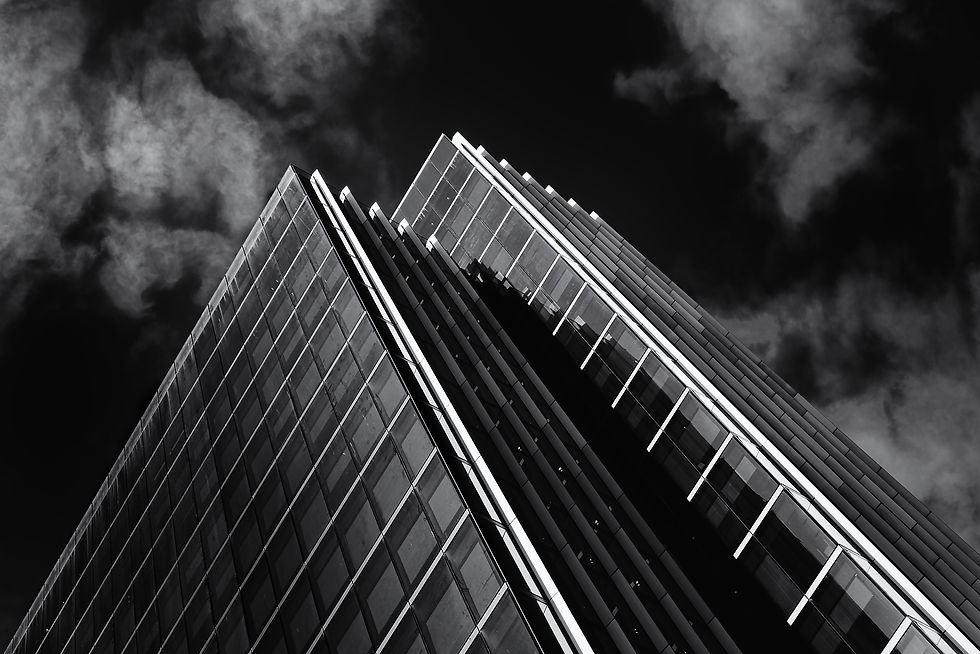
A macro lens doesn't have to be all about shooting small things. If you are considering buying a macro lens, think how else you might want to use it. This was one of the reasons why I chose 40mm lens as opposed to a 100mm. At 40mm (60mm FFE) I thought it could double as a street lens or general walkabout.

I’ve definitely had more use out of it and I've been pleased with the results. Using zone focus means I don’t have to worry about not having auto focus, I just set the focus at 2.5 metres F8 and everything is adequately in focus between 1.5 metres and infinity. Judges may say different, but street photographers say they have an acceptable level of sharpness rather than requiring a freeze frame pin sharp image all the way through. I do plan to try it out with some Astro Landscapes as well.
The purpose of this blog is not to encourage you to go and buy a macro lens, but highlight some considerations if you were thinking of buying one, or dust off the one you have and get more use out of it. There are lots of affordable and decent quality 3rd party macro lens options depending on your need and camera e.g. TTartisans, 7artisans, Samyang and Laowa. Always read reviews/ check out YouTube before deciding. Dustin Abbott or Christopher Frost cover a lot of lens reviews on YouTube. There isn't a perfect lens and all will have drawbacks, even the most expensive ones.
Thanks for reading and if anyone has any macro tips feel free to share on the WhatsApp group or maybe use the Members Facebook Group to share images and show examples.


Helpful and interesting - thanks Simon.